Sewage cleanup in South Prairie: health risks and safe steps
Raw sewage carries bacteria, viruses and parasites that can make you sick within hours. Here's what's dangerous, what you can safely do yourself, and when to call us.
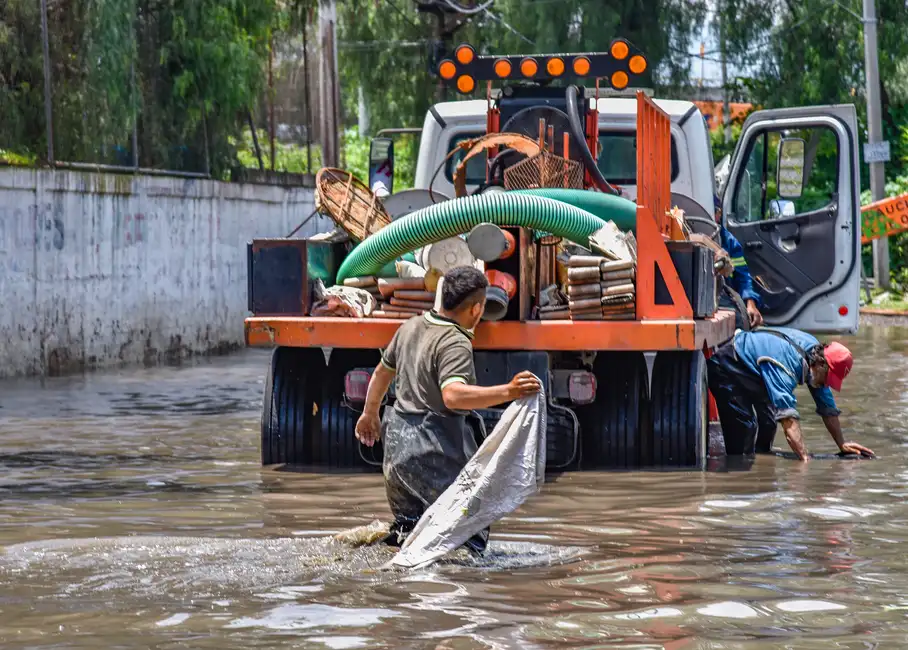
Sewage cleanup in South Prairie WA carries real health risks because raw sewage contains bacteria, viruses, and parasites that can cause serious illness within hours of contact. The safe approach is to stay out of the affected area, shut off the water source, ventilate the space, and call a licensed cleanup crew - do not vacuum, mop, or shop-vac Category 3 water yourself. Below we cover exactly what makes sewage dangerous, the specific pathogens involved, the steps you can safely take before help arrives, what a professional cleanup actually involves, and what it costs in South Prairie in 2026.
What makes sewage cleanup in South Prairie WA a health risk
Sewage cleanup in South Prairie WA is a health risk because the water is classified as Category 3 - "black water" - meaning it is grossly contaminated with human waste, and any surface it touches becomes a biohazard. That classification is not marketing language; it comes from the IICRC S500 standard, the same standard our technicians follow on every job.
Category 3 water is different from a clean supply-line leak or even a Category 2 washing-machine overflow. It carries fecal coliform, E. coli, Salmonella, Hepatitis A, Norovirus, and a list of parasites including Giardia and Cryptosporidium. A single gram of sewage can hold millions of bacteria. When it soaks into drywall, carpet pad, or the subfloor, those organisms do not just sit there - they multiply in the warm, damp conditions behind your baseboards.
South Prairie's older housing stock and clay-heavy soil make this worse. When the ground is saturated after a fall or winter rain event, the municipal line backs up into the lowest drain in the house - usually a basement floor drain or a laundry standpipe. We see this most often in the older blocks near Water Damage Restoration in Old Town South Prairie, where original cast-iron laterals are still in service. If you want the full picture of what we do across the region, our Water Damage Restoration team handles everything from a single backed-up floor drain to a full basement flood.
The specific illnesses raw sewage can cause
The most common illnesses from sewage exposure are gastrointestinal - diarrhea, vomiting, and stomach cramps - and they can start within 12 to 48 hours of contact. That is why we treat every sewage call as an urgent biohazard job, not a routine water extraction.
Here is what you are actually up against:
- Bacterial infections: E. coli, Salmonella, and Campylobacter cause severe diarrhea and can be life-threatening for children under 5, adults over 65, and anyone immunocompromised.
- Viral infections: Norovirus spreads through aerosolized droplets - meaning simply walking through a contaminated room can expose you. Hepatitis A attacks the liver and can take weeks to show symptoms.
- Parasitic infections: Giardia and Cryptosporidium survive in water and on surfaces for weeks. Cryptosporidium is chlorine-resistant, so a quick bleach wipe does not kill it.
- Respiratory issues: Drying sewage-contaminated materials without proper containment aerosolizes bacteria and mold spores. This is the single biggest mistake we see homeowners make.
- Tetanus and wound infections: Any cut or scrape exposed to sewage needs medical attention. Tetanus is rare but real.
If you have open cuts, asthma, or a compromised immune system, stay out of the affected area entirely. Pregnant women should not enter a sewage-contaminated space at all - the risk to the pregnancy is not worth any amount of DIY cleanup.
Safe sewage cleanup steps South Prairie WA homeowners can take
Safe sewage cleanup steps in South Prairie WA start with containment, not cleaning. Your job before we arrive is to stop the source, protect your lungs, and keep the contamination from spreading to clean parts of the house.
Do these in order:
- Stop the water. If the backup is from a fixture, shut off the supply valve. If it is a municipal main backup, stop using water in the house entirely - no showers, no flushing, no laundry - and call the city.
- Cut power to the affected area at the breaker panel only if you can reach it without stepping in sewage. If the panel is in the flooded basement, do not go in. Call an electrician or wait for us.
- Open windows and run exhaust fans if the space is above grade. Do not run your furnace or central AC - it will pull contaminated air through the whole house.
- Put on protection. Rubber boots, nitrile gloves, an N95 or P100 respirator, and eye protection. No exceptions. If you do not have these, do not enter.
- Block the area. Close doors, tape plastic over doorways if you have it, and keep kids and pets out completely.
- Photograph everything from the doorway for your insurance claim before anything is moved or removed.
- Call a professional sewage cleanup company. Extraction, disinfection, and drying of Category 3 water require commercial equipment and EPA-registered disinfectants.
Once we are on site, our process is straightforward: we extract the standing sewage with truck-mounted equipment, remove and bag any porous materials that cannot be saved (carpet, pad, saturated drywall), treat every hard surface with hospital-grade disinfectant, and then dry the structure with commercial dehumidifiers and air movers. We verify with moisture meters and, where needed, thermal imaging before we call the job dry.
What to watch out for during and after a sewage spill
The mistakes that turn a manageable sewage spill into a $20,000 rebuild almost always happen in the first two hours. Here is what we see most often.
- Running a wet/dry shop vac. A standard shop vac aerosolizes bacteria and sprays it into the air. It also voids the warranty on most rental units and does not actually remove contamination from the subfloor.
- Bleach-only cleanup. Household bleach at 1:10 dilution kills some bacteria on non-porous surfaces, but it does not penetrate drywall, does not kill Cryptosporidium, and leaves behind organic matter that feeds mold.
- Drying without removing material. If sewage-soaked drywall or carpet pad stays in place, mold colonization begins in 24 to 48 hours. By day four, you are looking at a mold remediation job on top of the sewage cleanup.
- Assuming the smell is gone means it is clean. Odor is a poor indicator. Sewage odor can be masked by disinfectant while bacteria remain in the subfloor and wall cavity.
- Waiting on the insurance call. Most policies cover sudden sewage backup, but the clock on mitigation starts the moment the water hits the floor. Document, then mitigate, then settle.
If the spill happened in a finished basement, the risk of hidden moisture behind baseboards and under flooring is high. That is why we treat every basement sewage call with the same protocol we use for a full basement flood cleanup South Prairie WA - extract, remove, disinfect, dry, verify.
How much does sewage cleanup cost in South Prairie WA?
Typical 2026 pricing for sewage cleanup in South Prairie WA runs $1,200 to $3,500 for a small backup (a single bathroom or laundry area), and $4,000 to $12,000 or more for a finished basement with carpet, drywall, and furniture involved. The variables that move the number most are square footage affected, how much porous material has to be removed, and whether mold has already started.
Here is a rough breakdown of what drives the invoice:
- Emergency call-out and assessment: $150-$400
- Extraction and disposal of Category 3 water: $500-$1,500
- Removal of contaminated materials: $300-$1,200
- Disinfection and sanitization: $400-$1,000
- Structural drying (3-5 days typical): $600-$2,500
- Mold remediation if needed: $1,500-$6,000+
Most homeowner policies with a sewage backup endorsement cover the mitigation and the contents, but not always the source repair. We document everything with photos, moisture readings, and a written scope so your adjuster has what they need. If you are also dealing with a supply-line failure at the same time, our water leak restoration South Prairie WA team can handle both in one visit.
When to call a professional for sewage backup cleanup
Call a professional for sewage backup cleanup any time the affected area is larger than about 10 square feet, the water has reached drywall or carpet, or the backup came from a municipal line or toilet. Those three conditions mean Category 3 contamination that household tools cannot fix.
You should also call us if:
- The sewage smell persists more than 24 hours after you cleaned.
- Anyone in the house has been sick since the backup.
- The affected area is a basement, crawl space, or any space with limited ventilation.
- You see discoloration or a musty smell on walls or ceilings within a week.
- You are filing an insurance claim and need documented mitigation.
Our team at Water Damage Restoration South Prairie handles emergency sewage cleanup across the South Prairie area, including Water Damage Restoration in Downtown South Prairie and the surrounding neighborhoods. We arrive with truck-mounted extraction, EPA-registered disinfectants, and commercial drying equipment - and we tell you the price before we start.
Frequently Asked Questions
What are the health risks of sewage cleanup in South Prairie WA?
The main risks are bacterial infections (E. coli, Salmonella), viral infections (Norovirus, Hepatitis A), and parasitic infections (Giardia, Cryptosporidium), plus respiratory irritation from aerosolized bacteria and mold. Symptoms typically appear 12 to 48 hours after exposure. Children, seniors, pregnant women, and immunocompromised people face the highest risk and should not enter a contaminated space.
What are safe steps for sewage cleanup in South Prairie Washington?
Stop the water source, cut power only if safely reachable, ventilate the space, and put on rubber boots, gloves, eye protection, and an N95 respirator. Do not vacuum or mop. Photograph the damage for insurance, block off the area, and call a licensed cleanup crew. Extraction, disinfection, and structural drying require commercial equipment.
Do I need professional sewage cleanup in South Prairie WA?
Yes, if the affected area exceeds roughly 10 square feet, if water reached drywall or carpet, or if the backup came from a toilet or municipal line. Those conditions mean Category 3 black water, which household tools cannot safely remediate. Professional crews have truck-mounted extraction, hospital-grade disinfectants, and moisture verification equipment.
How much does sewage cleanup cost in South Prairie WA?
In 2026, expect $1,200 to $3,500 for a small backup and $4,000 to $12,000 or more for a finished basement. Cost depends on square footage, how much porous material must be removed, and whether mold has started. Most homeowner policies with a sewage backup endorsement cover mitigation and contents.
How long does sewage cleanup take?
Extraction and disinfection usually take one day. Structural drying takes three to five days with commercial equipment running continuously. If mold remediation is required, add three to seven days. We verify moisture readings before we remove equipment, so the timeline is based on actual dryness, not a guess.
Get help with Water Damage Restoration in South Prairie
Sewage backups do not wait for a convenient time, and the health risks grow with every hour the contamination sits. Our team at Water Damage Restoration South Prairie is ready to extract, disinfect, and dry your home safely - with upfront pricing before we start.
Call (833) 321-7153 now for emergency sewage cleanup in South Prairie, WA.